Correcting the Canon: The Evans-Tibbs Collection


 Podcast Addict
 Overcast
Welcome back to "A Long Look!" For the rest of the season, I'll be presenting paintings from the Evans-Tibbs Collection, one of the most important collections of works by Black artists in America.
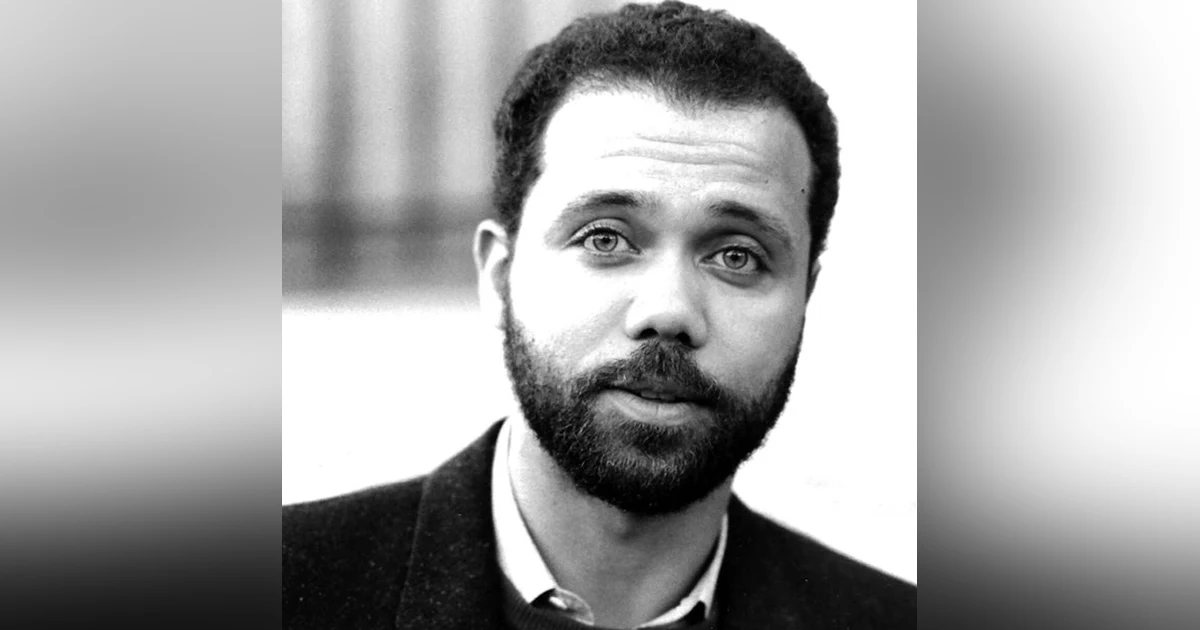
It was the mission of Thurlow Evans Tibbs Jr. to raise the profile of Black artists by collecting and exhibiting their work in his Washington DC gallery from the 1970s through the early '90s and by documenting their careers in an enormous archive. He inherited his love of art from his grandmother, known as Madam Evanti, the first professional African American opera singer to perform internationally.
Joining me in this introductory episode is Tibbs scholar Sandy Bellamy, an adjunct art history professor at Howard University and manager of the Percent for Art Commissions program run by the Washington DC Department of General Services. Sandy takes us through the fascinating history of the collection, and the rich legacy of Black art scholarship born at Howard University decades earlier.
SHOW NOTES
"A Long Look" theme is "Ascension" by Ron Gelinas youtu.be/jGEdNSNkZoo
Episode theme is "Opportunity Walks" by Kevin MacLeod.
https://incompetech.filmmusic.io/song/4173-opportunity-walks
http://creativecommons.org/licenses/by/4.0/
Artwork information
https://www.nga.gov/exhibitions/special/american-art-evans-tibbs.html
Digitized Evans-Tibbs archive items
https://library.nga.gov/discovery/collectionDiscovery?vid=01NGA_INST:NGA&collectionId=8153325980004896
BOOKS MENTIONED
The New Negro, Alain Locke
Modern Negro Art, James Porter
Hello, and welcome to a long look, a podcast about experiencing slow art at the national gallery of art in Washington, DC. I'm your host, Karen Jackson for the remainder of the season. I'll be presenting works from the Evans-Tibbs Collection, one of the most important collections of works by Black artists in America.
We'll be joined today by Sandy Bellamy, an adjunct art history professor at Howard University and manager of the percent for art commissions program run by the Washington DC Department of General Services. Sandy will be sharing her extensive scholarship on Thurlow Evans Tibbs Jr., the prominent DC arts collector and advocate who built this incredible collection.
Along with the collection, Tibbs built an enormous archive of more than a thousand files on artists of the African diaspora. They contain exhibition, brochures, photos, slides, letters, newspaper clippings, gallery records, anything he could find to document the careers and works with these artists. Tibbs’ goal was to build support for the arts in Washington and raise the profile of black artists.
The collection and archive would be a way for art historians to reassess their work and their inclusion or lack of it. In art history, books and museum collections, Tibbs donated his collection and the archive to the Corcoran Gallery of Art in 1996. The National Gallery acquired them after the Corcoran closed.
So let's find out more from Sandy,
Sandy. Welcome to a long look.
Sandy: Thank you. Karen.
Karen: Tell us how you got interested in Thurlow Tibbs.
[00:01:51] Sandy: I went to Howard University, fine art department and studied art history. Graduated in 1995 and was introduced to the Washington African American art scene by my professor, Tritobia Benjamin. And of course the rich legacy of Howard University and its impact on scholarship as it pertains to African American art and how that art informed modern Western art. The Evans-Tibbs collection was one of the more recent, relatively recent and important collections in the country at the time.
[00:02:37] Karen: So what got him into collecting? And especially to focus on not just African American artists, but from the whole African diaspora?
[00:02 :46] Sandy: I would say two things. Thurlow Tibbs was the grandson of Annie Lillian Evans Tibbs. Her stage name was Madam Evanti. She was the first professional African American opera singer to perform worldwide.
She took her grandson with her on international trips and exposed him to a very worldly culture and how African Americans were very much a part of that world culture. For instance, she befriended Henry Ossawa Tanner while she was performing in Paris but when she came home, her home welcomed many important figures who impacted American culture and also inspired civil right movements around the world, like W.E.B. duBois, Booker T. Washington, Langston Hughes. Haile Selassie. His grandfather was the first African American United States Senator. His father was an attorney. I mean, he just said a very educated and cultured worldly family.
And then, you know, Thurlow Tibbs himself studied art history at Dartmouth. And after that, he went on to Harvard to earn his degree in urban planning. When he returned to Washington and after his grandmother passed, the home was the perfect place to continue her legacy of studying, appreciating and contributing to the canon African American arts and culture.
And that's what he did. He turned their home on Vermont Avenue down the Hill from Howard University into a very vibrant place to be. As people say, who attended the events, it was the place to be, where you could not only appreciate and discover new artists, see old masters or relatively old masters, but to converse with other exciting people in the city. It was just a really vibrant synergy, a creative culture that he nurtured there at the Evans Tibbs home .
[00:05:14] Karen: Nice. Now, can you give us a timeframe for when he had the gallery?
[00:05 :18] Sandy: So after earning his degree in urban planning, he worked for the GSA as a planner and retired from GSA in 1989. But a little bit before that he had already begun collecting. Of course he had very strong foundation in art history, but he also had a strong appreciation and understanding of African diasporic art history from his colleagues and peers at Howard University, but it wasn't until 1983 that he had his first widely reviewed exhibit on surrealism and the African American artist. And in that show included Hughie Lee-Smith, Archie Motley, Gail Shaw Clemons who is still practicing art today in DC, Irene Clark, Raymond Dobard who was a professor of art history and practicing artist at Howard. Charles White, Hale Woodruff. And then he continued to hold exhibitions. During the eighties, he did a great job featuring African American women in the arts, including Margaret Burroughs and Sharon Sutton. Other exhibits featured Romare Bearden, Schroeder Cherry, who's still practicing art in the DC area, Julie Dickerson, Louis Delsarte, who sadly recently passed Marion Perkins. Sam Gilliam, Betye Saar. And with Betye Saar, she also contributed to the Evans-Tibbs archives. They were working together to document the record of artists practicing. And of course, David Driskell.
[00:07:12] Karen: What was his most influential exhibit?
[00:07:15] Sandy: The biggest exhibit that he had was in 1989, an exhibit sponsored by the Smithsonian Institute, traveling exhibition service, otherwise known as SITES and sponsored by the NEH and the DC Humanities Council. This exhibit traveled to 20 different states and it was entitled African American Artists, 1880 –1987: Selections from the Evans-Tibbs Collection.
It featured Romare Bearden, Elizabeth Catlett, Lois Mailou Jones, Hughie Lee-Smith, Betye Saar. Henry Ossawa Tanner and James Van Der Zee.
And also what's very important about the Evans-Tibbs Collection is not just the works of art. The archive has very, rare documents. Joshua Johnston is known as the first African American professional artists in the country who practiced as a portrait in Baltimore. So having a primary source document of the Baltimore city directory of 1810 listing Joshua Johnston is very important to document his role in the canon of American art history. And then also add Edmonia Lewis, one of our earliest sculptors, African American female sculptors, just beautiful sculptures and very rare.
He has a rare leaflet published by Edmonia Lewis herself entitled, How Edmonia Lewis Became an Artist dated around 1870. So these are the kinds of things that collectors and historians love to come across to further document and record about the role of African American artists.
[00:9:03] Karen: He has a wonderful quote in one of the sources I've found that says he wanted to “…provide options for art, historians and writers, when they start the revisionary studies and they will.” Do you know what new scholarship came out of the archive?
[00:9:20] Sandy: Looking at the archive, again, one very important document—two--was around Joshua Johnston and Edmonia Lewis, you know, we don't have much information on this artist, so to have those items and then.
His final act of benevolence, giving that collection to the Corcoran Gallery, which then gave it to the National Gallery enables artists today, historians collectors to see the timeline of African-Americans producing art in America. So I think those are two of the most probably most valuable archival materials in the collection that are still used to this day. And then, you know, scholarship doesn't just happen from art historians and universities, but it happens a lot through the gallerists because when you do a show, you produce a catalog. You're helping that artist further their career. That catalog itself becomes a record, a primary source document with quotes from the artist, background of the artist, that help scholars in future place those artists within a broader context.
In that quote, he also said in the nineties, 1990s, “all periods of American art are going to be reanalyzed and recalculated. There needs to be materials so that they can say, Oh, here's an artist who was working in the 1960s. He wasn't covered before, but he's pretty good. Maybe we should put them in our anthology this time.”
That's what's happening, I mean. Because when you look at the development of African American history and African Americans in the field of museum studies, he's completely right. Because at that time, during the nineties, you had Richard Powell, you had David Driskell. I mean, you had some major African American curators and scholars redefining, revisiting the traditional American timeline to insert and properly document Black artists who were contributing to American modern art.
And this is the result of a tree of knowledge that I think begins a lot with Alain Locke. Alain Locke, who authored The New Negro and advocated that African Americans should look toward African formalism to celebrate African American culture as a unique culture, like with Edmonia Lewis or Joshua Johnston, while they were African American artists, they were emulating a Eurocentric aesthetic and inspiration.
From Alain Locke’s inspiration, we have the Renaissance, a lot of people think that Renaissance took place in Harlem, but it was born at Howard University in the department of philosophy under the scholarship of Alain Locke. And he inspired so many artists to look toward their African past, to create amazing works of art, not just visual art, we're talking literary arts, we're talking music, everything that was celebrating in the Renaissance as a unique African American cultural expression can relate back to the advocacy and scholarship of Alain Locke, the first black Rhodes Scholar. And from there you have James Herring, who founded the Howard University department of art and created the gallery with Alonzo Aiden, and then they created the Barnett-Aiden collection.
And then you have the first student Alma Thomas, and you have Lois Jones, a professor at Howard, David Driskell, a student, James Wells, the professor. You know, I was looking at the early class offerings… I mean, these guys were–and women—their knowledge of art in general, not just African and African American art.
They offered classes in Asian art, European art, Latin art. They were just very much interested in the diaspora then. So this is not a new concept of African American art in the diaspora. This is something that begins in the twenties and continues down through generation from professor to student, colleague to student and Thurlow Tibbs is definitely a branch of that tree.
One of his peers of that time was Adolphus Ealey who inherited the Barnett-Aiden collection from James Herring. Again, one of the most important African American art collections in the world, now owned by Bob Johnson. I can't emphasize how incredibly thoughtful and accomplished these men and women were in setting the foundation for the art world that we have today.
[00:14:48] Karen: And speaking of David Driskell, you had started to mention this when we were speaking earlier, Thurlow was able to retire, as you say, and was able to turn his passion for art into another career. Can you tell us a little bit about how he managed to do that? Did he have mentors? How did he get launched down that path?
[00:15:08] Sandy: Well, I want to emphasize that he already had a degree in art history from Dartmouth, but he also had a living degree, a life degree in art history from his family and his travels, but also being right there within steps of U Street, DC's Renaissance location, within steps of Howard University and communication with the incredible brain trust at Howard University.
And I want to get back to that tree because they didn't stop with Alonzo Aiden and James Herring. You know, then we had a shift. Then Jeff Donaldson came to head the department. And in his way through Africobra, doubled down on Alain Locke's philosophy of celebrating a unique African American aesthetic. And there was a big debate, you know, what would art be without debate, right?
[00:16:06] Karen: Exactly! Yeah, yeah.
[00:16:08] Sandy: And there were huge, huge contradi… not contradictions, but just really arguments between like Alain Locke and James Herring. And I'm sorry, but I forgot to mention James Porter, author of Modern Negro Art. He created the textbook, literally the textbook, which is what I learned from when I went to Howard fine art on the evolution of African American art.
He literally was within steps of the center for scholarship. On African American art and culture. And not only did he have that access physically through friends and peers, but also he had it formally through his own education. So, I mean, he was definitely in the right place and the right time to create a really fabulous collection and rotation of exhibitions done in a scholarly way.
[00:17:11] Karen: That's amazing. That really is amazing. We're kind of getting to the end. Let me just ask you this. Is there one other thing you would like everyone to know about Thurlow Tibbs or his collection?
[00:17:27] Sandy: A lot of people focus on Thurlow Tibbs as an art dealer, an art gallerist. In preparing for this interview, I learned that he was a very civic-minded individual who supported politicians. He supported the gay community in Washington, DC. He had an annual event called Shirts and Shorts. He charged $5 admission and the donations went to the black gay community. The city's first gay oriented organization, the Gertrude Stein–Langston Hughes organization, their mailing address was the Evans Tibbs home.
He was a gracious person. I'd like to share some of the comments from his friends about really the man Thurlow Tibbs outside of being a collector. I also meant to mention that he contributed to a publication called Blacklight, which was a black gay publication, and wrote articles on art and culture for Blacklight.
But his friends say this: Thurlow was not hard to like at all. He was handsome, he had the build of a gymnast, an impeccable dresser. He was gracious. He was open to conversations with people of all backgrounds. He was humble. He was funny. He loved to tell stories and he had a very embracing spirit. He just seemed to be a very civic-oriented person who not only gave so much to the art world, not just in physical collection, but also scholarship.
But he also gave friendship and he gave support and he did things that weren't as readily accepted as they are today. And he was courageous in doing that. So I think. That's comments from his friends, I wanted to recall, not just for Thurlow, but a little bit for the people that he loved and he wanted to support, not just artists, but people from all different different facets of society in Washington, DC, who benefited from his friendship and presence here.
[00:19:50] Karen: Wow. That's amazing!
[00:19:52] Sandy: There are a few people that I would like to thank who help with Philip Pannell who's an activist in Ward 8. And Michael, known as Michael known as “Micci” Saint Andress who is a playwright and actor at Pratt who is also an art dealer who worked a lot with the Barnett-Aiden collection and Ronald King, who was a classmate of Thurlow Tibbs at Dartmouth.
[00:20:20] Karen: Sandy, I cannot thank you enough for not just coming on the podcast today, but for this tremendous amount of legwork you did in assembling all this information and I think that is a wonderful place to kind of wrap it up. And I just want to thank you again and enjoy the rest of this very hot afternoon in DC.
[00:20:38] Sandy: Thank you. I really enjoyed the assignment and thank you for sharing details about African American artists within the National Gallery of Art. I think that's a beautiful thing. We really appreciate it.
[00:20:51] Karen: I'm happy to, it's important to share these stories And just a quick footnote, they have started to digitize the Evans-Tibbs archives. So there is some material already available online and I'll make sure to include a link to that in the show notes.
I hope you enjoyed this introduction to Thurlow Tibbs, Jr. and I look forward to sharing with you some of the works in his collection. You can find links to more information in the show notes and as always, thanks for joining me.